Egy fóliázógép beszerzésénél könnyű a vételár alapján dönteni. Ha két ajánlat között több ezer euró különbség van, elsőre egyértelműnek tűnik, melyik a jobb választás.
A csomagolásban viszont a gép ára csak az egyik költség. A nagyobb kérdés az, hogy mennyi fólia fogy majd el vele raklaponként, mennyire stabil lesz a rakat, mennyi lesz az állásidő, és milyen gyakran kell beavatkozni a működésébe.
Egy olcsóbb gép így sokszor nem a vásárlás pillanatában kerül sokba, hanem az évek alatt felhalmozódó többletfogyasztásban.
A gép ára egyszeri tétel, a fóliafogyás viszont napi költség
Egy fóliázógép ára egyszer jelenik meg a beruházásban. A fóliafelhasználás viszont minden egyes raklapnál újra és újra jelentkezik.
Ha egy gép nem tud megfelelő előnyújtást, nem stabilan szabályozza a fóliafeszítést, vagy nem illeszkedik a használt fóliához, akkor több anyag kerül a raklapra. Ez elsőre apró különbségnek tűnhet, például 50 vagy 100 gramm raklaponként.
Nagyobb volumen mellett ez már éves szinten tonnákban mérhető többletfelhasználás. Ezért nem elég azt kérdezni, mennyibe kerül a gép. Azt is meg kell nézni, mennyibe kerül vele becsomagolni egy raklapot.
Az olcsóbb gép gyakran fejletlenebb technológiát jelent
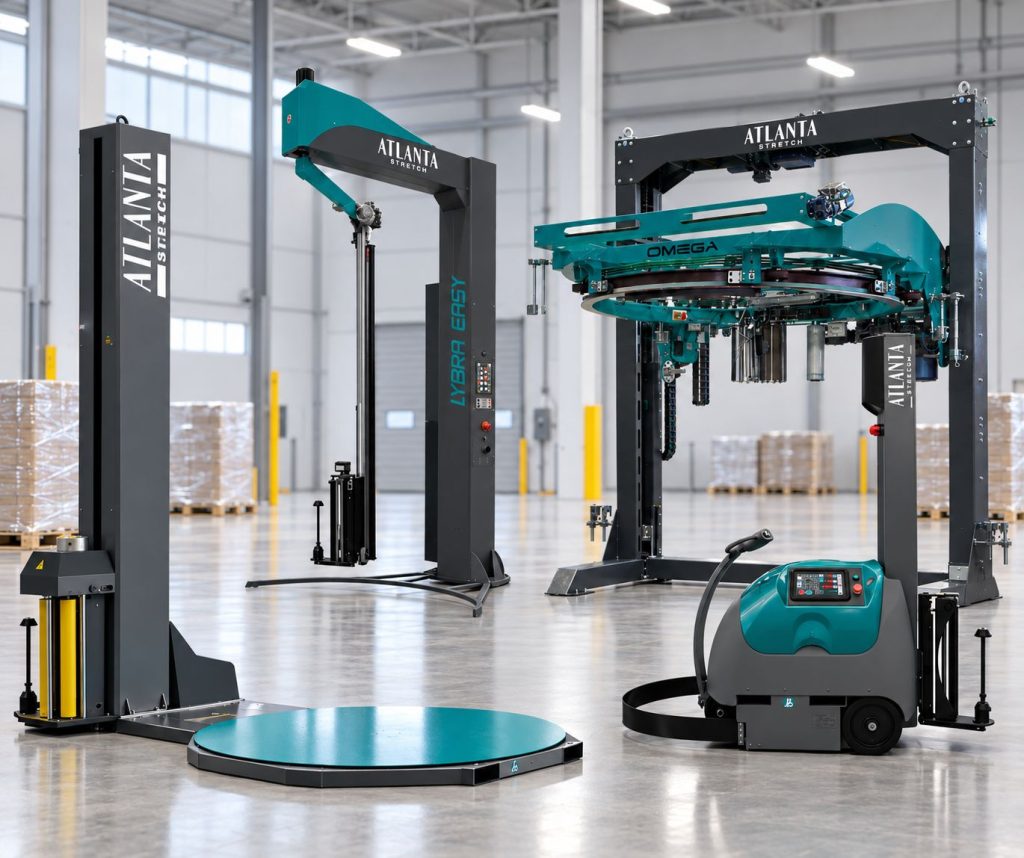
Két fóliázógép kívülről nagyon hasonlónak tűnhet. Forgótányér, oszlop, fóliakocsi, vezérlés. A valódi különbség sokszor a részletekben van.
Például abban, hogy:
- milyen előnyújtó rendszerrel dolgozik,
- mennyire pontosan tartja a fóliafeszítést,
- milyen fóliákat képes kezelni,
- mennyire stabil a működése nagyobb terhelés mellett,
- és hogyan lehet programozni különböző rakatokhoz.
Ezek nem látványos funkciók egy ajánlatban, de közvetlenül befolyásolják az anyagfelhasználást és a rakat stabilitást. Ha egy olcsóbb gép nem tudja azt az előnyújtási szintet vagy szabályozási pontosságot, amire a modern stretch fóliákhoz szükség van, akkor a megtakarítási lehetőség nagy része már az első napon elveszik.
A tenderben olcsóbb, üzemeltetésben drágább
Sok beszerzési folyamatban a gépeket vételár alapján hasonlítják össze. Ez érthető, mert ez a legkönnyebben mérhető szám. A csomagolás teljes költsége viszont nem itt dől el.
Egy drágább gép jobb előnyújtással és pontosabb fóliakezeléssel kevesebb fóliát használhat raklaponként. Ez azt jelenti, hogy a magasabb beruházási ár idővel visszajöhet a csökkent anyagfelhasználásból, az alacsonyabb EPR-díjból, a kevesebb fóliaszakadásból és a stabilabb működésből.
Egy olcsóbb gépnél ezzel szemben előfordulhat, hogy a beruházás pillanatában sikerül spórolni, de a rendszer hosszú távon több fóliát fogyaszt, több beavatkozást igényel, és gyengébb csomagolási teljesítményt ad.
Miért fontos az előnyújtás?
Az előnyújtás lényege, hogy a gép a fóliát a felhelyezés előtt megnyújtja. Minél hatékonyabban történik ez, annál kevesebb anyagból lehet elérni a szükséges tartóerőt.
Ez nem azt jelenti, hogy mindig a legnagyobb előnyújtási szám a cél. A jó beállítás a fólia, a termék, a rakat típusa és a szállítási körülmények alapján alakul ki.
A probléma akkor kezdődik, amikor a gép technikailag nem képes arra, amit a feladat igényelne. Ilyenkor a rendszer több fóliával próbálja pótolni azt, amit valójában gépoldalon kellene megoldani.
Ez a legdrágább megoldás: több anyag, ugyanaz vagy gyengébb rakat stabilitás mellett.
A rossz gépválasztás a termelésre is hat
A fóliázógép a gyártási sor végén dolgozik. Ha itt gond van, az könnyen visszahat az egész folyamatra.
Egy nem megfelelő gép miatt gyakoribb lehet a fóliaszakadás, több lehet az operátori beavatkozás, lassulhat a csomagolás, és nőhet az állásidő. Ezeket ritkán számolják bele a gép vételárába, pedig a napi működésben nagyon is megjelennek.
A stabil, jól beállított gép nemcsak kevesebb fóliát használ. Kiszámíthatóbbá teszi a folyamatot.
Hogyan érdemes gépet választani?
A jó döntéshez nem elég három ajánlatot egymás mellé tenni.
Érdemes először megvizsgálni:
- mennyi fólia fogy jelenleg raklaponként,
- milyen rakat stabilitási szint szükséges,
- milyen fóliával dolgozik az üzem,
- mennyi a napi vagy havi raklapszám,
- milyen gyakori a fóliaszakadás vagy leállás,
- és milyen megtakarítás várható egy jobb gépbeállítással vagy új berendezéssel.
A kérdés tehát nem az, hogy melyik gép olcsóbb. A kérdés az, hogy melyik géppel lesz alacsonyabb a teljes csomagolási költség.
When buying a stretch wrapper, it is easy to decide on purchase price. If there is a difference of several thousand euros between two offers, it may seem obvious at first which is the better choice.
In packaging, however, the price of the machine is only one cost. The bigger question is how much film it will use per pallet, how stable the load will be, how much downtime there will be, and how often someone will need to intervene in its operation.
So a cheaper machine often becomes expensive not at the moment of purchase, but through excess consumption that accumulates over the years.
The machine price is a one-off item, but film consumption is a daily cost
The price of a stretch wrapper appears once in the investment. Film consumption, however, recurs with every single pallet.
If a machine cannot deliver adequate pre-stretch, does not control film tension consistently, or is not matched to the film in use, more material goes on the pallet. At first this may seem a small difference, for example 50 or 100 grams per pallet.
At higher volumes, this adds up to excess consumption measured in tonnes per year. That is why it is not enough to ask how much the machine costs. You also need to look at how much it costs to wrap a pallet with it.
A cheaper machine often means less advanced technology
Two stretch wrappers can look very similar from the outside: turntable, mast, film carriage, controls. The real difference is often in the details.
For example:
- what pre-stretch system it uses,
- how accurately it maintains film tension,
- which films it can handle,
- how stable its operation is under heavier loads,
- and how it can be programmed for different loads.
These are not eye-catching features in a quotation, but they directly affect material use and load stability. If a cheaper machine cannot achieve the level of pre-stretch or control accuracy that modern stretch films require, much of the savings potential is lost on day one.
Cheaper in the tender, more expensive to run
In many procurement processes, machines are compared on purchase price. This is understandable, as it is the easiest figure to measure. But the total cost of packaging is not decided here.
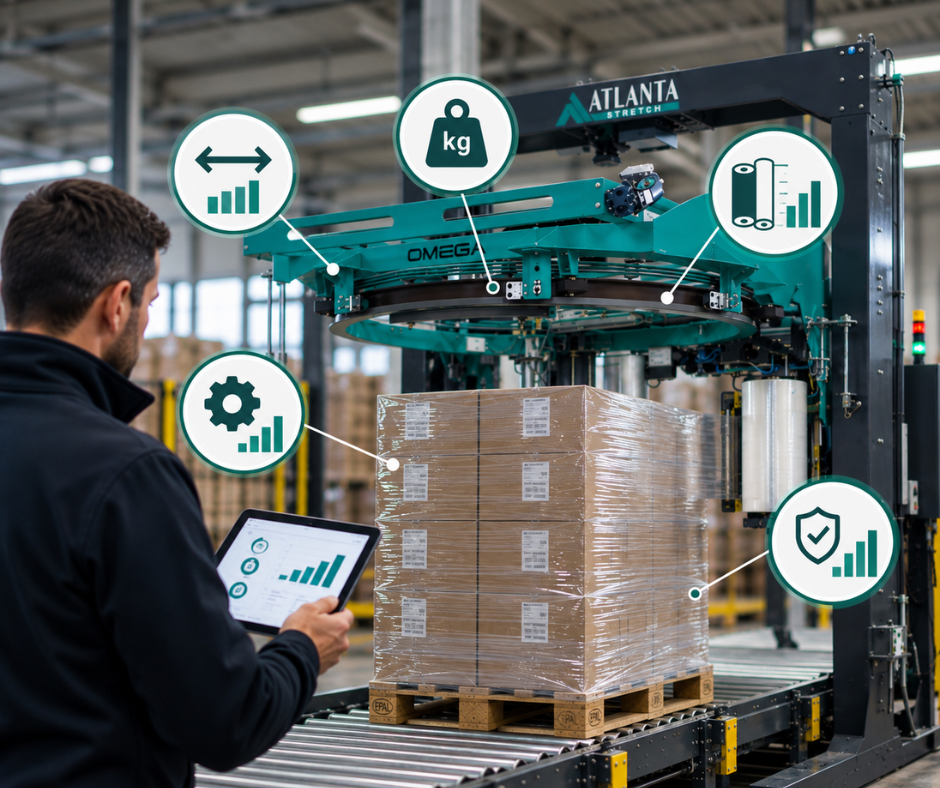
A more expensive machine with better pre-stretch and more precise film handling can use less film per pallet. This means the higher investment cost can be recovered over time through lower material use, a lower EPR fee, fewer film breaks and more stable operation.
With a cheaper machine, by contrast, you may save at the moment of investment, but in the long run the system consumes more film, needs more intervention and delivers weaker packaging performance.
Why does pre-stretch matter?
The point of pre-stretch is that the machine stretches the film before applying it. The more efficiently this is done, the less material is needed to achieve the required containment force.
This does not mean that the highest pre-stretch figure is always the goal. The right setting depends on the film, the product, the load type and the transport conditions.
The problem starts when the machine is technically incapable of what the task requires. The system then tries to make up with more film for what should really be solved on the machine side.
This is the most expensive solution: more material, with the same or weaker load stability.
The wrong machine choice also affects production
The stretch wrapper works at the end of the production line. If there is a problem here, it can easily affect the whole process.
An unsuitable machine can lead to more frequent film breaks, more operator intervention, slower packaging and more downtime. These are rarely factored into the machine’s purchase price, yet they very much show up in daily operations.
A stable, well-adjusted machine not only uses less film. It makes the process more predictable.
How should you choose a machine?
Putting three quotations side by side is not enough for a good decision.
It is worth first examining:
- how much film is currently used per pallet,
- what level of load stability is required,
- which film the plant works with,
- the daily or monthly pallet volume,
- how frequent film breaks or stoppages are,
- and what savings can be expected from better machine settings or new equipment.
So the question is not which machine is cheaper. The question is which machine will deliver the lowest total packaging cost.