Új lapon nyílik meg

4 szempont a megfelelő fóliázógép kiválasztásához

4 factors for choosing the right stretch wrapping machine

Before purchasing a stretch wrapping machine, it is worth weighing several technical and logistical factors. The number of pallets to be wrapped determines the level of automation you need, while the weight and stability of the load determine the machine’s operating principle.

Egy stretchfóliázógép beszerzése előtt célszerű több műszaki és logisztikai szempontot mérlegelni. A csomagolandó rakatok száma kijelöli a szükséges automatizáltsági szintet, míg a rakomány tömege és stabilitása a gép működési elvét határozza meg.

Íme négy fő szempont, amelyek kiindulópontot adhatnak a döntéshez.

1. Hány rakatot kell becsomagolni?

Az első kiindulási adat a szükséges kapacitás. Tapasztalataink alapján nagyjából 10–20 rakat/óra teljesítményig a félautomata gépek jelentik a megfelelő választást, míg 15–20 rakat/óra felett már az automata fóliázógépek használata indokolt.

A két kategória között a folyamatok automatizáltsága képezi a különbséget:

  • Félautomata gépeknél a gépkezelő igazítja helyére a raklapot, rögzíti a fóliát a ciklus elején, a csomagolás végén pedig levágja az anyagot és eltávolítja a rakatot.
  • Automata rendszereknél a rakomány görgős vagy láncos szállítópályán érkezik a fóliázási pozícióba, majd a program lefutása után a berendezés automatikusan továbbítja a kész rakatot.

Ezek a kapacitási értékek hasznos támpontot nyújtanak, a konkrét modellt pedig mindig a helyi csomagolási folyamathoz igazítva célszerű kiválasztani.

2. Működési elv: forgóasztalos, forgókaros vagy mobil fóliázó?

A következő lépés a gép mechanikai felépítésének meghatározása. Az egyes típusok eltérő teljesítményre és rakománytípusokra alkalmasak:

  • Forgóasztalos gépeknél maga a rakomány forog az asztalon, míg a fóliakocsi függőlegesen mozog. Alacsonyabb és közepes kapacitáshoz, stabil rakatokhoz ideális.
  • Forgókaros gépeknél a rakat mozdulatlanul áll a talajon, és egy mechanikus kar forog körülötte. Ideális nehéz, instabil vagy könnyen felboruló rakományokhoz, közepes és nagy csomagolási kapacitás esetén.
  • Forgógyűrűs gépeknél a rakat szintén egy helyben áll, de a fóliakocsi egy nagy sebességű, függőlegesen mozgó gyűrűn forog körbe. Ez a leggyorsabb technológia, amit kifejezetten nagy kapacitású, automata gyártósorokhoz használnak.
  • A mobil fóliázórobotok egy vezetőkerék segítségével mozognak a raklap körül. Előnyük, hogy könnyedén mozgathatók közvetlenül a kívánt csomagolási helyre. Napi 15–180 rakat közötti volumenhez ajánljuk őket.

3. Mennyi stretchfóliát használ a gép?

A gépválasztás meghatározza a későbbi csomagolási költségeket is, ebben pedig a fóliakocsi típusa a kulcstényező.

A félautomata berendezéseknél például többféle kivitelben érhetők el az előnyújtó kocsik. A megfelelő előnyújtás drasztikusan csökkenti az egy rakományra kerülő stretchfólia mennyiségét, így értelemszerűen a csomagolás költségét is.

A csomagolás gazdaságosságát ugyanis nem a fólia kg-ára, hanem az egy rakatra jutó anyagfelhasználás határozza meg. A gép műszaki adottságai, a fólia minősége és a beállítások együtt határozzák meg a tényleges költséget.

4. Hogyan változhat később a csomagolási igény?

A hosszú távú beruházásnál érdemes a későbbi fejleszthetőséget is figyelembe venni. Számos modellünknél a fóliakocsi utólag is cserélhető, így a teljes gép leváltása nélkül is felszerelhető egy nagyobb teljesítményű egység.

Ez a modularitás praktikus megoldást jelent azoknál a vállalatoknál, ahol a jelenlegi volumen még nem teszi szükségessé a nagyobb kapacitású szerkezetet, de a jövőben várható a termelés növekedése vagy a csomagolási elvárások változása.

Tekintse át elérhető automata és félautomata stretchfóliázógépeinket!

Melyik fóliázógép megfelelő az Ön számára?

Csomagolástechnológusaink segítenek kiválasztani a legmegfelelőbb fóliázógépet. A berendezés kiválasztásán túl a fóliatípus és a gépbeállítások összehangolásában is támogatást nyújtunk, biztosítva a kívánt rakatstabilitást az optimális anyagfelhasználás mellett.

Ehhez első lépésként kiszállunk az Ön telephelyére, és díjmentes auditunk keretében megvizsgáljuk a konkrét rakatok jellemzőit és felmérjük a jelenlegi csomagolási folyamatok hatékonyságát.

👉 Igényelje helyszíni auditunkat:
https://manupackaging.hu/audit-2/


Before purchasing a stretch wrapping machine, it is worth weighing several technical and logistical factors. The number of pallets to be wrapped determines the level of automation you need, while the weight and stability of the load determine the machine’s operating principle.

Here are four key factors that can serve as a starting point for your decision.

1. How many pallets need to be wrapped?

The first input is the required capacity. In our experience, semi-automatic machines are the right choice up to roughly 10–20 pallets per hour, while above 15–20 pallets per hour automatic stretch wrappers are justified.

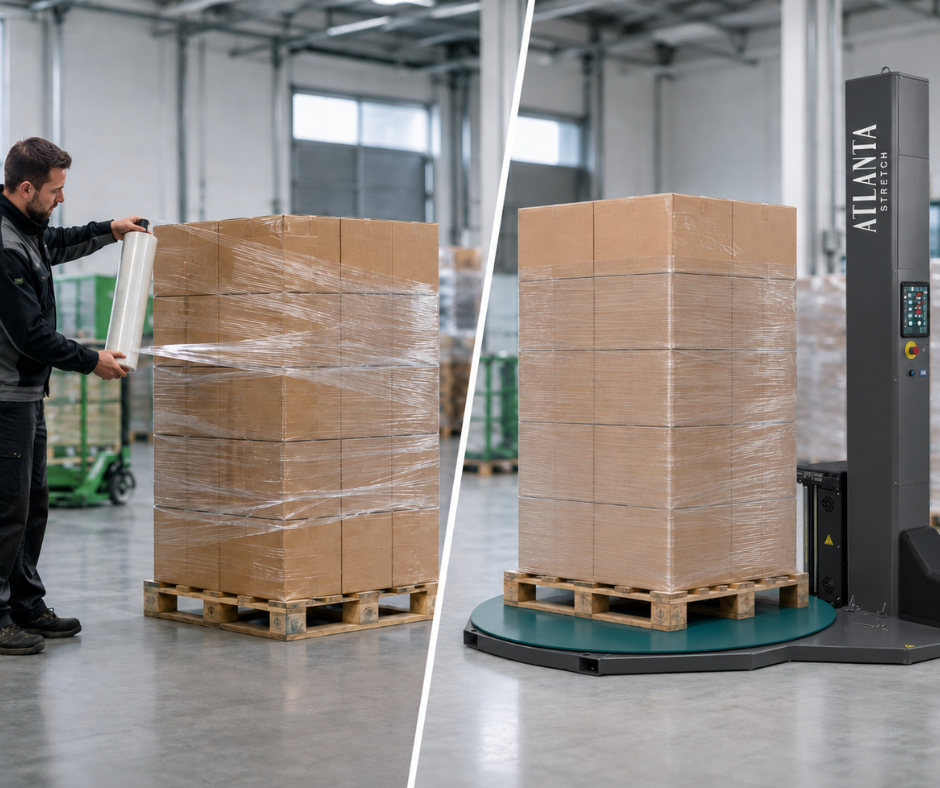
The difference between the two categories lies in the degree of process automation:

  • With semi-automatic machines, the operator positions the pallet, attaches the film at the start of the cycle, and at the end cuts the film and removes the load.
  • With automatic systems, the load arrives at the wrapping position on a roller or chain conveyor, and once the program has run, the machine automatically conveys the finished pallet onward.

These capacity figures are a useful guide, but the specific model should always be chosen to fit your local packaging process.

2. Operating principle: turntable, rotary arm or mobile wrapper?

The next step is to define the mechanical design of the machine. Each type suits different outputs and load types:

  • On turntable machines the load itself rotates on the table while the film carriage moves vertically. Ideal for low to medium capacity and stable loads.
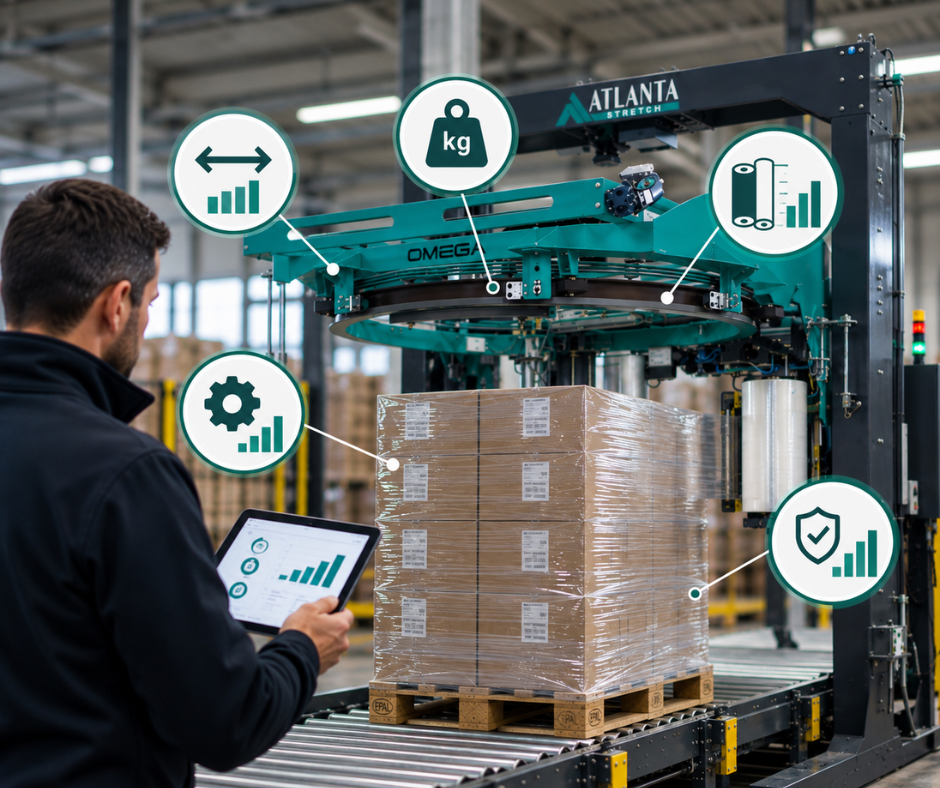
  • On rotary arm machines the pallet stands still on the floor and a mechanical arm rotates around it. Ideal for heavy, unstable or easily tipped loads at medium to high packaging capacity.
  • On rotating ring machines the pallet also stays in place, but the film carriage travels around it on a high-speed, vertically moving ring. This is the fastest technology, used specifically on high-capacity automatic production lines.
  • Mobile wrapping robots move around the pallet using a guide wheel. Their advantage is that they can easily be moved directly to where packaging takes place. We recommend them for volumes of 15–180 pallets per day.

3. How much stretch film does the machine use?

Your choice of machine also determines your future packaging costs, and the type of film carriage is the key factor here.

For semi-automatic machines, for example, pre-stretch carriages are available in several versions. The right pre-stretch drastically reduces the amount of stretch film used per load – and with it, of course, the cost of packaging.

Packaging economy is determined not by the price per kg of film, but by the material used per pallet. The machine’s technical capabilities, the quality of the film and the settings together determine the actual cost.

4. How might your packaging needs change later?

For a long-term investment, it is worth considering future upgradeability. On many of our models the film carriage can be replaced later, so a higher-performance unit can be fitted without replacing the whole machine.

This modularity is a practical solution for companies whose current volume does not yet require a higher-capacity design, but where production growth or changing packaging requirements are expected in the future.

Browse our automatic and semi-automatic stretch wrapping machines!

Which stretch wrapper is right for you?

Our packaging technologists help you choose the most suitable wrapping machine. Beyond selecting the equipment, we also help you match the film type and machine settings, ensuring the required load stability with optimal material use.

As a first step, we visit your site and, as part of our free audit, examine the characteristics of your specific loads and assess the efficiency of your current packaging processes.

👉 Request our on-site audit:
https://manupackaging.hu/audit-2/