In many industries, packaging is often treated as a given: “this is how we’ve always done it,” “it works well enough.”
However, the case of one of our flour mill partners once again proved that data-driven packaging optimisation delivers tangible business results – even in highly automated environments.
Industry and activity
Our partner operates in the milling industry, where pallet stability, product safety, and cost efficiency are all equally critical factors.

Why did the collaboration start?
The starting point of our cooperation was a classic, yet highly relevant challenge:
- high packaging material costs
- unnecessarily high specific film consumption
The objective was clear: cost reduction, while maintaining packaging safety.
Initial situation – when “reported data” differs from reality
Before testing and on-site measurements, the partner indicated that:
- they were using 17 micron (µm) stretch film
- film consumption per pallet was 233 grams
However, during the on-site audit it became clear that:
- a 20 micron film was actually in use
- meaning the basic data itself was inaccurate
Once again, this highlighted a key principle:
without accurate measurement, real optimisation is impossible.
Was packaging machine replacement necessary?
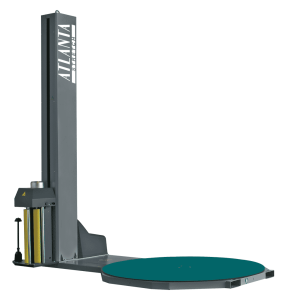
The partner currently uses an automatic stretch wrapping machine.
During the project, no machine replacement or new investment was required.
Switching to a more suitable film and optimising machine settings proved sufficient to achieve the desired results.
Scope of the assignment
The task was straightforward:
- reduce film consumption
- lower packaging costs
- maintain pallet stability and load safety
The result – measurable success
After optimisation and testing:
- the operation was switched to 15 micron stretch film
- film consumption per pallet was reduced to 162 grams
In practical terms, this means:
- 31% film savings
- 71 grams saved per pallet
- approximately 2,500 kg of film saved annually
What does this mean from a business perspective?
- lower packaging material costs
- reduced raw material usage
- more sustainable operations
- significant savings without capital investment
Summary
This project clearly demonstrates that:
packaging decisions should be based on measurements, not habits.
Even in automated packaging systems, there is often substantial hidden potential in film selection and machine parameter optimisation.